
Ukraine
UKRAINE
As the invasion of Ukraine continues, Amnesty International is keeping a close eye on human rights abuses and the well-being of civilians.
Since the beginning of the conflict, Amnesty International has documented war crimes, including the targeting of critical civilian infrastructure and blocking of aid for civilians. Civilians in conflict-affected areas have been exposed to constant attacks and often cut off from water, electricity and heating. Many people living in Russian-occupied areas remain in dire need of humanitarian assistance or medical care, yet are being denied the right to travel to Ukrainian government-controlled territories.
Amnesty International has documented the devastating impact of Russia’s systematic attacks on Ukraine’s energy system in a new series of testimonials from survivors enduring a freezing winter without heat, electricity or running water.
Based on the testimonies of dozens of people from across the country, the researchopens in a new tab tells the stories of Ukrainian civilians living with the fallout from massive, incessant Russian attacks that have caused widespread and ongoing disruption to essential services. By the time of the interviews, many of those who spoke to Amnesty International had survived weeks with intermittent or no electricity supply and no heating amid the country’s coldest winter since the beginning of the full-scale Russian invasion.
“Russia isn’t just waging a war of aggression against Ukraine, it is subjecting the entire civilian population to a campaign of extreme cruelty. The scale and intensity of its attacks on vital energy infrastructure clearly indicate a strategy to spread despair among Ukraine’s civilian population and break its morale,” said Agnès Callamard, Amnesty International’s Secretary General.
“News headlines cannot convey the experience of trying to survive without electricity, running water and heating during a long, freezing winter and amid nightly air raids. Today, while we are telling these stories, Russia’s relentless attacks continue and humanitarian conditions in Ukraine grow increasingly catastrophic.”
“Since the beginning of its invasion of Ukraine, Russia has blatantly disregarded international law, including rules that protect civilians in warfare. Those responsible for atrocity crimes should know these crimes have no statute of limitation. People in Ukraine and beyond will relentlessly pursue truth, justice, and reparation and we will support them.
Since last October, Russia has carried out several hundred intense long-distance aerial attacks against Ukraine. In January, these were daily – and often nightly – targeting the entire energy infrastructure. As a result, Ukraine lost more than half of its energy-producing capacity, and emergency power cuts have affected 80% of the country. This happened amid a winter in which temperatures have fallen below -15°C (5° Fahrenheit).
Interviewees, and Amnesty International’s staff members in Ukraine, have spoken of stone-cold apartment blocks, frozen and burst pipework, stalled elevators, discharged mobile phones and disrupted phone networks. As one person said: “At this point, we’re in harsh survival mode.” Many residents have relied on camping and kerosene stoves to heat bricks and water bottles. Some have resorted to dangerous coping mechanisms, such as setting up camping tents inside their bedrooms and lighting candles within them to fight the cold.
Svitlana, a pensioner from Kyiv, said that during blackouts: “I warm some water in a cup on a kerosene stove, fill up two bottles, one [goes] under my feet, the other in my hands, so as not to freeze. And we all sleep dressed… Dressed under duvets, all that we have, we put on.”
There are many people, including older persons and people with disabilities, who are isolated and confined to their apartments, without any means of communication, whose circumstances are likely much worse than those documented in this research and who may not live through this winter to tell their story.
Amnesty International has documented widespread violations of international human rights and humanitarian law in Ukraine since Russia’s full-scale invasion began on February 24, 2022, including war crimes and crimes against humanity. Russia’s full-scale invasion constitutes aggression, which is a crime under international law. Its strategy and tactics, including continued use of indiscriminate weapons and deliberate targeting of civilians, have caused widespread human suffering and seriously impacted Ukraine’s most vulnerable people, including children and older people. The scale and pattern of Russian aerial attacks across the country has clearly indicated that it has been seeking to damage Ukraine’s energy infrastructure.
Read more:
Ukraine: “Mine is half-trouble only… I can ignite the gas, heat a brick, and warm myself up.” Dire humanitarian effects of the systematic Russian attacks on the energy system (Public Statement, February 10, 2026) https://www.amnesty.org/en/documents/eur50/0686/2026/en/
Maria Ponomarenko, a journalist from Barnaul in Western Siberia, was sentenced to six years in a penal colony for posting on social media about an attack by Russian forces on a theatre in Mariupol Ukraine in which civilians were killed.
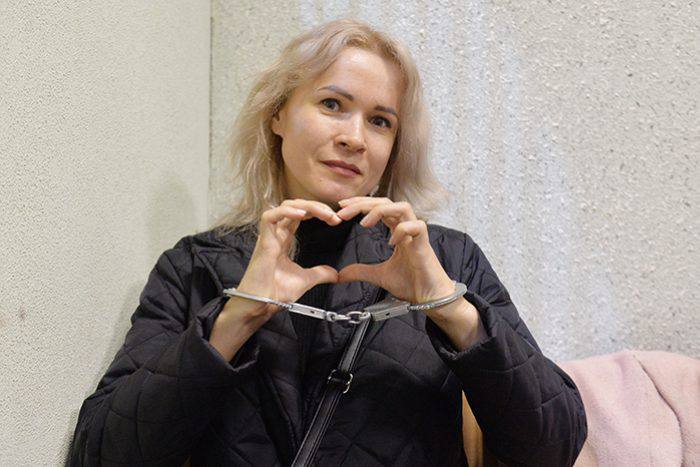
In a statement to the court, Maria Ponomarenko, 44, who wore a print of the Star of David bearing the written inscription ‘Opposition activist, patriot, pacifist’ around her neck, said she did not consider herself a criminal.
“I have the right to say the word ‘war’ because I am being judged under the laws of military censorship,” she said referring to a ban by the Russian authorities on referring to invasion of Ukraine as a ‘war.’
 amnestycalifornia.org